Yakamoz
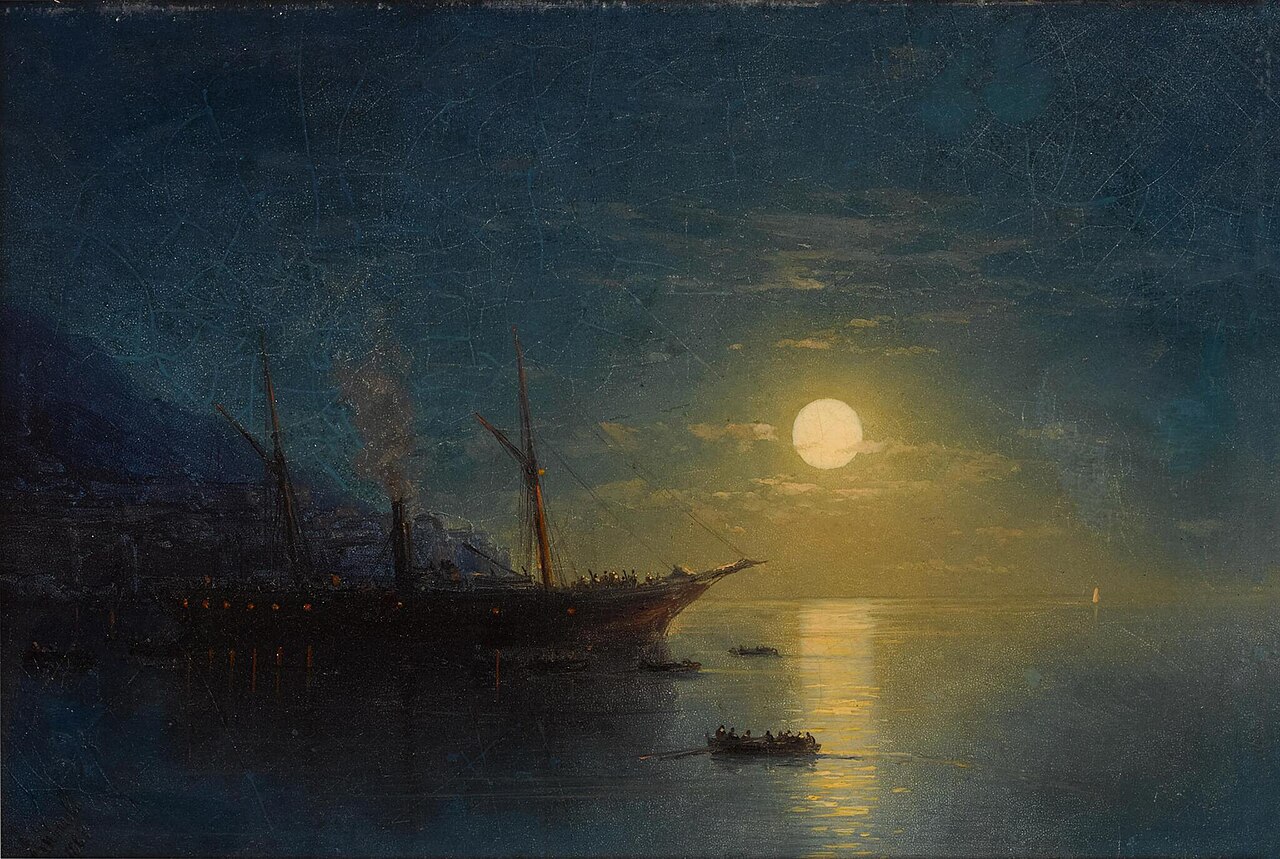
The shimmering, silvery reflection of moonlight dancing across the surface of the sea or a large body of water. It describes that specific visual phenomenon where the moon's light fractures and sparkles across rippling water, creating an almost liquid luminescence.
Why this word exists
Turkey's long Mediterranean and Aegean coastlines made the night sea a constant presence in Ottoman and Turkish life. Fishermen, traders, and travelers navigated by moonlight for millennia, and that intimate knowledge of how the moon actually behaves on water—not as a distant celestial body, but as a living, dancing presence on the waves—warranted its own word.
Yakamoz captures something beyond mere description: it holds a romantic, almost spiritual quality in Turkish culture. The phenomenon appears frequently in Turkish poetry, music, and visual art as a symbol of beauty, longing, and the intersection of the celestial and earthly. It represents a moment of natural magic that Mediterranean cultures, in particular, recognized as worthy of singular attention.
In practical terms, yakamoz would have been significant to sailors and fisherfolk who read the water's condition by how moonlight scattered across it. But the word's persistence and poetic resonance in modern Turkish—used by city-dwellers far from the sea—shows how deeply the image is woven into Turkish aesthetic consciousness. It remains a word that signals not just observation, but a particular Turkish sensibility toward nature's quieter wonders.
Origins
Yakamoz likely derives from Greek roots, possibly connected to the ancient Greek *phōs* (light) tradition, though the exact path remains debated among etymologists. The Turkish form may also show influence from Ottoman maritime vocabulary, given Turkey's long relationship with the Mediterranean and Aegean seas. Some scholars suggest a connection to Venetian or Italian nautical terms that entered Turkish during centuries of Mediterranean trade and contact. The word became standardized in modern Turkish during the 19th and 20th centuries, though it may have existed in regional or dialect forms earlier. Its current form appears fully naturalized within Turkish, despite its likely foreign origins—a common pattern for words describing phenomena important to seafaring cultures.
Denizde yakamoz görülüyordu, dalgaları gümüş ışığıyla aydınlatan. — The yakamoz was visible on the sea, illuminating the waves with silver light.
Yakamoz appears in the works of major Turkish poets and has become a stock image in Turkish romantic literature, yet remains almost entirely unknown outside Turkish-speaking regions. The word also appears in some Greek dialects along the coast, suggesting it may have traveled both directions across the Aegean—a linguistic echo of Mediterranean cultural exchange.