Tsundoku
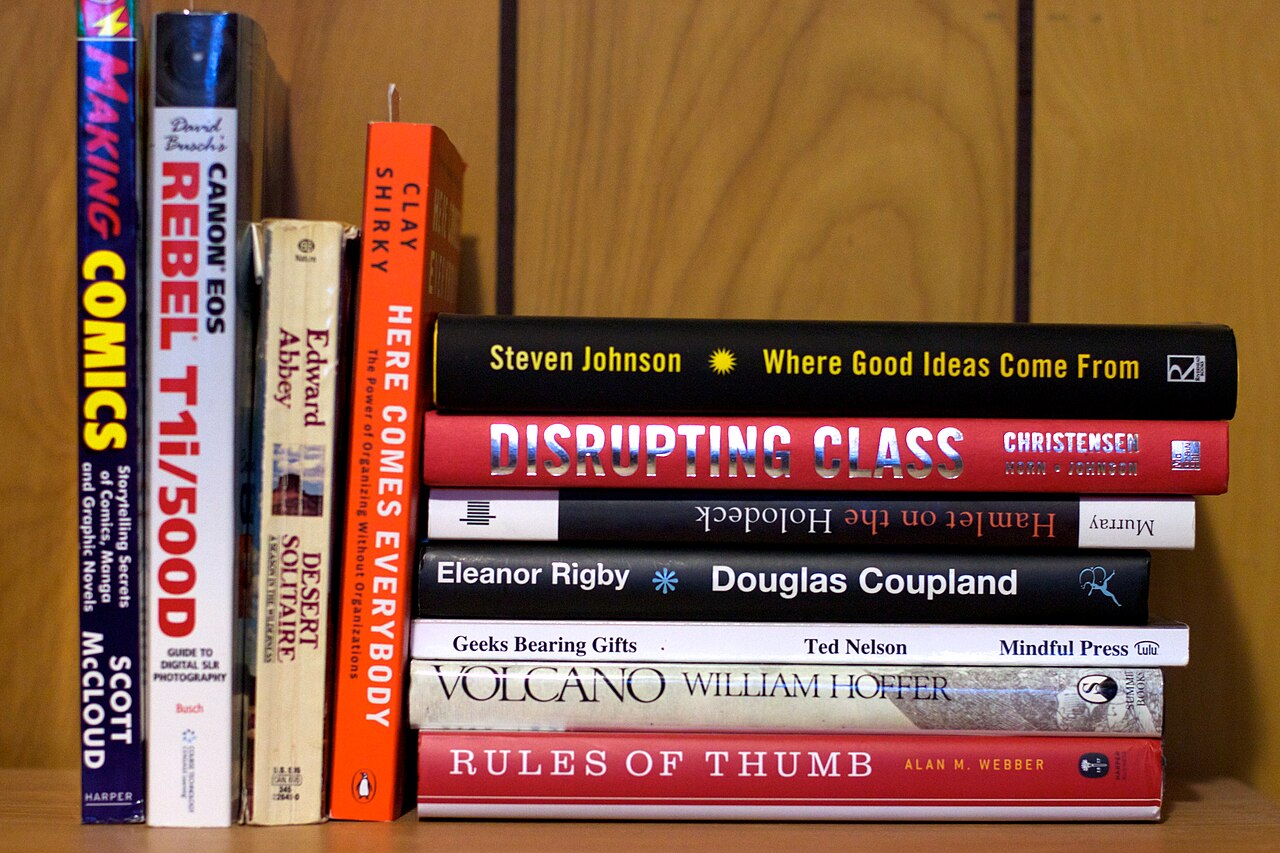
The act of buying books and accumulating them in a stack with the intention to read them, but never actually reading them. It describes both the behavior and the physical pile itself—a monument to good intentions.
Why this word exists
Tsundoku thrives in Japanese culture partly because of the nation's deep reverence for books and learning, combined with a frank, humorous approach to human weakness. Japan has long celebrated reading as a marker of cultivation and self-improvement—values embedded in education and social discourse. Yet the word also reflects modern consumer culture: the ease of buying, the abundance of titles, and the gap between aspiration and action that characterizes contemporary life.
There is also a distinctly Japanese comfort with acknowledging flaws without shame. Rather than hiding the unread stack, tsundoku names it, making it an object of gentle self-mockery rather than guilt. This reflects a cultural tendency to observe and label human behavior with wry acceptance. The word has resonated so strongly globally (despite having no English equivalent) because it captures a universal experience—the optimism of purchase, the weight of obligation, the quiet failure of intention—that many readers recognize immediately.
In Japan's tight living spaces, too, the physical reality of tsundoku is inescapable: books accumulate visibly on shelves and floors, making the word not merely psychological but architectural.
Origins
Tsundoku is a relatively modern Japanese word, likely coined in the early 20th century, though not appearing in major dictionaries until much later. It combines 積む (tsumu, "to pile up" or "to accumulate") with 読む (yomu, "to read"). The pairing is playful and somewhat ironic—the two verbs are joined in a way that suggests simultaneity or intention, yet the word's very existence acknowledges the impossibility of that pairing in practice. Some sources suggest it may have emerged from literary or bookish circles in Meiji or Taisho-era Japan, periods of rapid modernization and increased access to printed materials, though precise documentation is elusive. The word gained wider recognition in recent decades, particularly after appearing in Japanese dictionaries and being popularized online.
My apartment is drowning in tsundoku—three shelves of novels I swear I'll read next month. — 私のアパートは積ん読で溺れている。来月読むと誓った小説が3棚ある。
Tsundoku has become so recognizable globally that it appeared in a 2014 Oxford Dictionaries online poll as one of the most difficult words to translate, and in 2016 it was featured in the Japanese Cultural Expo as an example of untranslatable Japanese vocabulary. The word has spawned merchandise, memes, and book-themed social media communities celebrating the shame-free aesthetic of the unread stack.